Installation details

english name
Reservoir of Aspar
turkish name
Sultan Selim Çukurbostanı, Çarşamba Çukurbostanı
original name
κινστέρνα του Άσπαρος, of the Pantepoptes (later)
ottoman name
Çukurbostan
events
event persons
purposes
still exists
Yes
type
Cistern (open)
location
-
description

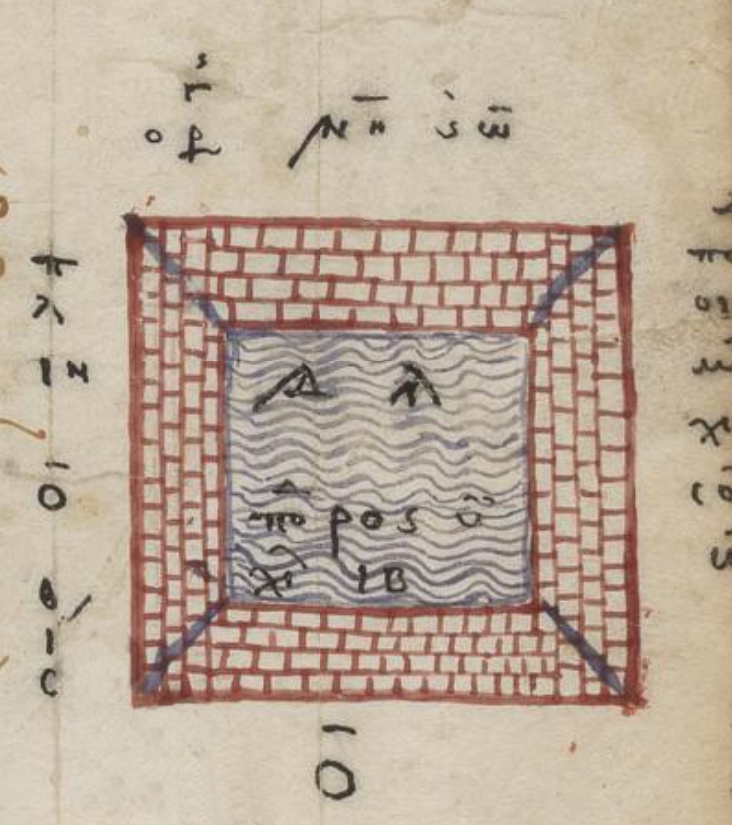
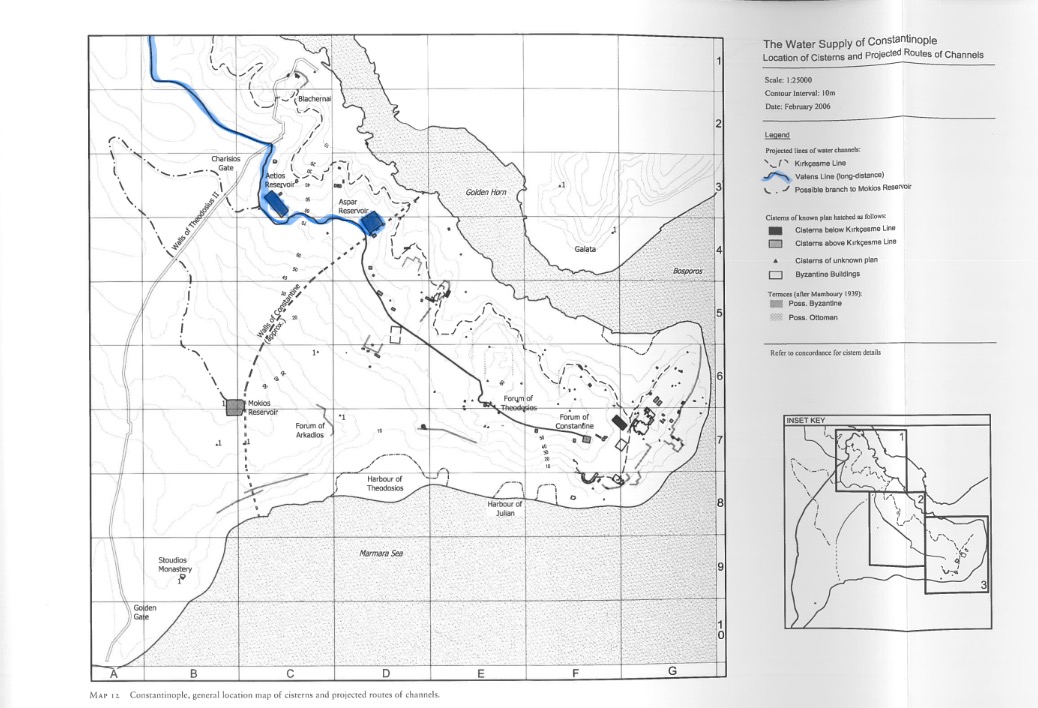
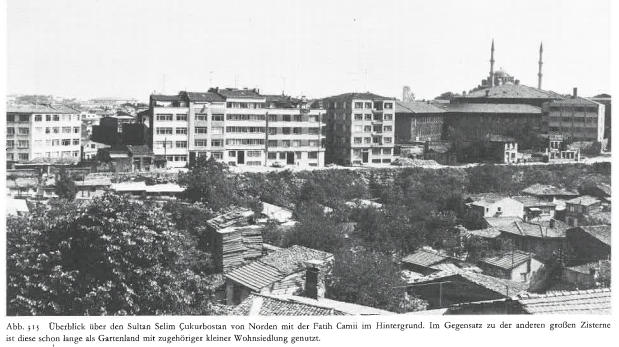
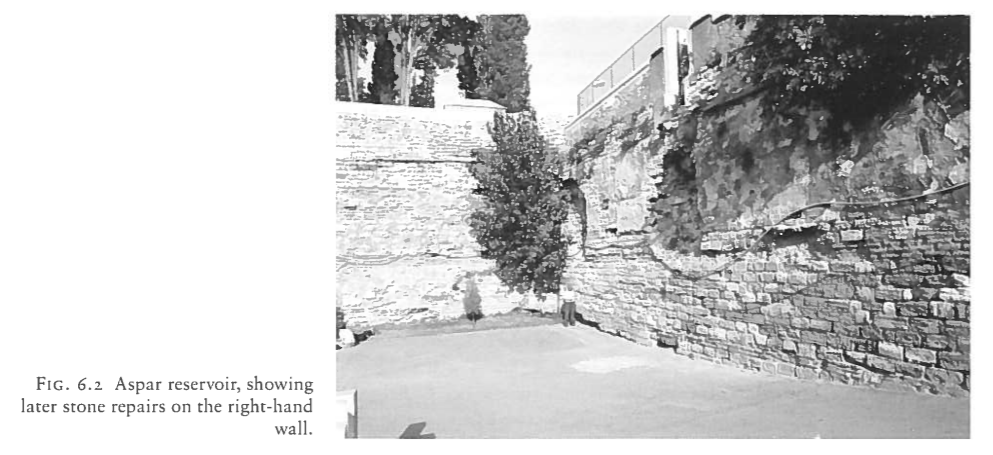
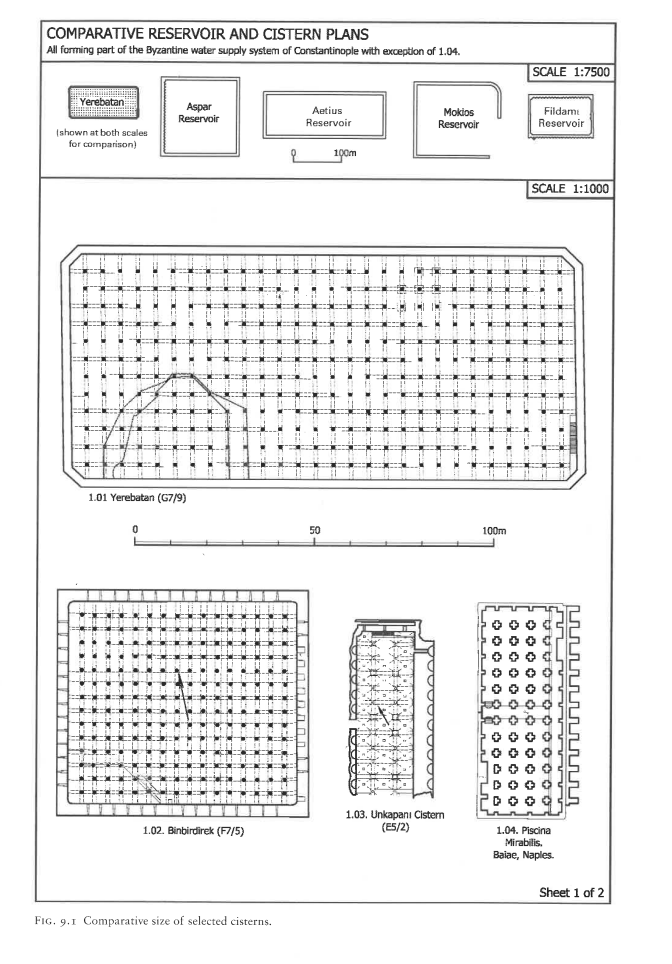
The Open Reservoir of Aspar (Region XIV, Fifth Hill) measured 152 x 152 x 10–11 meters, with a surface area of 23,100 m² and a capacity of about 250,000 m³. Due to water pressure, it could only be safely filled to 7.5 meters. The structure alternated bands of brick (0.5 m) and stone-faced mortared rubble (1.2 m), with brick arches on the south-west wall.

Evidence suggests it was supplied by the Valens Waterway, though in- and output channels are no longer visible. Built alongside the new high-level water supply, its open design and location between the Constantinian and Theodosian walls imply agricultural use. Nearby closed cisterns may have helped regulate water flow.

Today, the site is a public park (the Çarşamba Çukurbostan Parkı) and children’s school.
comments
-
systems
external
-
 
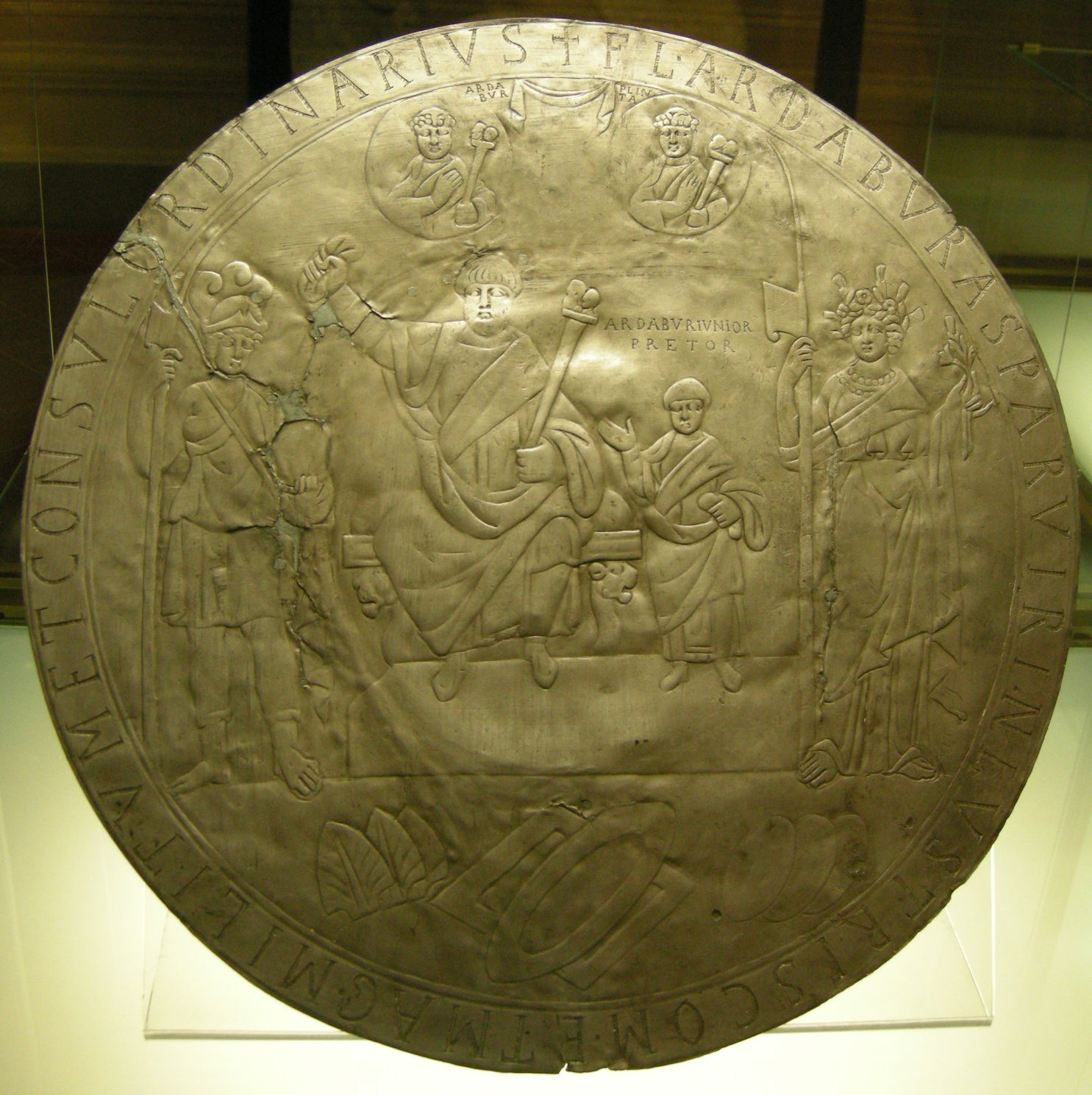
Gift to commemorate the western consulship of Flavius Ardabur Aspar in 434 A.D. All around the outer edge of the dish there is a band filled with an inscription. The knurl of the letters of the inscription indicates that they were decorated with niello. Starting from a cross at top centre it runs as follows: FL(avius) ARDABUR ASPAR VIR INLUSTRIS COM(es) ET MAG(ister) MILITUM ET CONSUL ORDINARIUS. In addition to the relief, decorative elements are accomplished through finely applied chasing in the metal that creates stippling to suggest folds and patterns on textiles, as well as subtle decorative elements such as bracelets. The central area of decoration shows the consul Ardabur Aspar, seated on a cushioned throne with lion legs, and his young son standing, with the inscription ARDABUR IUNIOR PRETOR. The throne is on an elevated platform that is decorated with a band of waves, below which squares alternate to circles, clearly suggestive of a woven fabric. The upper surface of the platform is decorated with parallel dotted lines. Ardabur Aspar, bearded and wearing a tunic and a toga, holds up in his right hand the mappa, and in his left a sceptre surmounted by two small busts of the two reigning emperors, Theodosius II and Valentinian III. His son also wears a tunic and a toga, also holds a mappa raised in his left hand, and uses his right to salute to the consul. Above them there are two medallions containing the busts of his father Ardabur, consul in 427, and his relative Plintha, consul in 419, with adjoining inscriptions. Between the imagines clipeatae there is a curtain, the presence of which indicates that the two men are already dead. Both deceased consuls also carry scepters with the busts of the then reigning emperors on top.

Aspar and his son are flanked by two city goddesses, both of whom hold the fasces. In this sense, the city goddesses serve as the consuls’ lictors. On the left of the missorium a figure clearly identifiable as Roma wears a short chiton, which leaves her right breast bared, a paludamentum, a sword-belt, and an Attic helmet with three crests. On her feet are high-laced military boots, the soles of which are clearly indicated, with bare toes. The goddess holds with the left hand a globe and the fasces with her right. A wreath decorates the standard. She wears a bracelet on her right wrist and a second one on her upper arm, while a single string of pearls hangs around her neck. On the right of the dish is another city, often identified Constantinople, who wears a long tunic and a mantle. On her feet are sandals, the sole and thongs of which are fully rendered in fine detail. The goddess, who also wears two strings of pearls and a crown of roses and leaves, holds with her left hand a flower and stalk of grain, and the fasces in her right. The standard shows a square inside which is a circular element, maybe a wreath, and a ribbon sways from the stick.