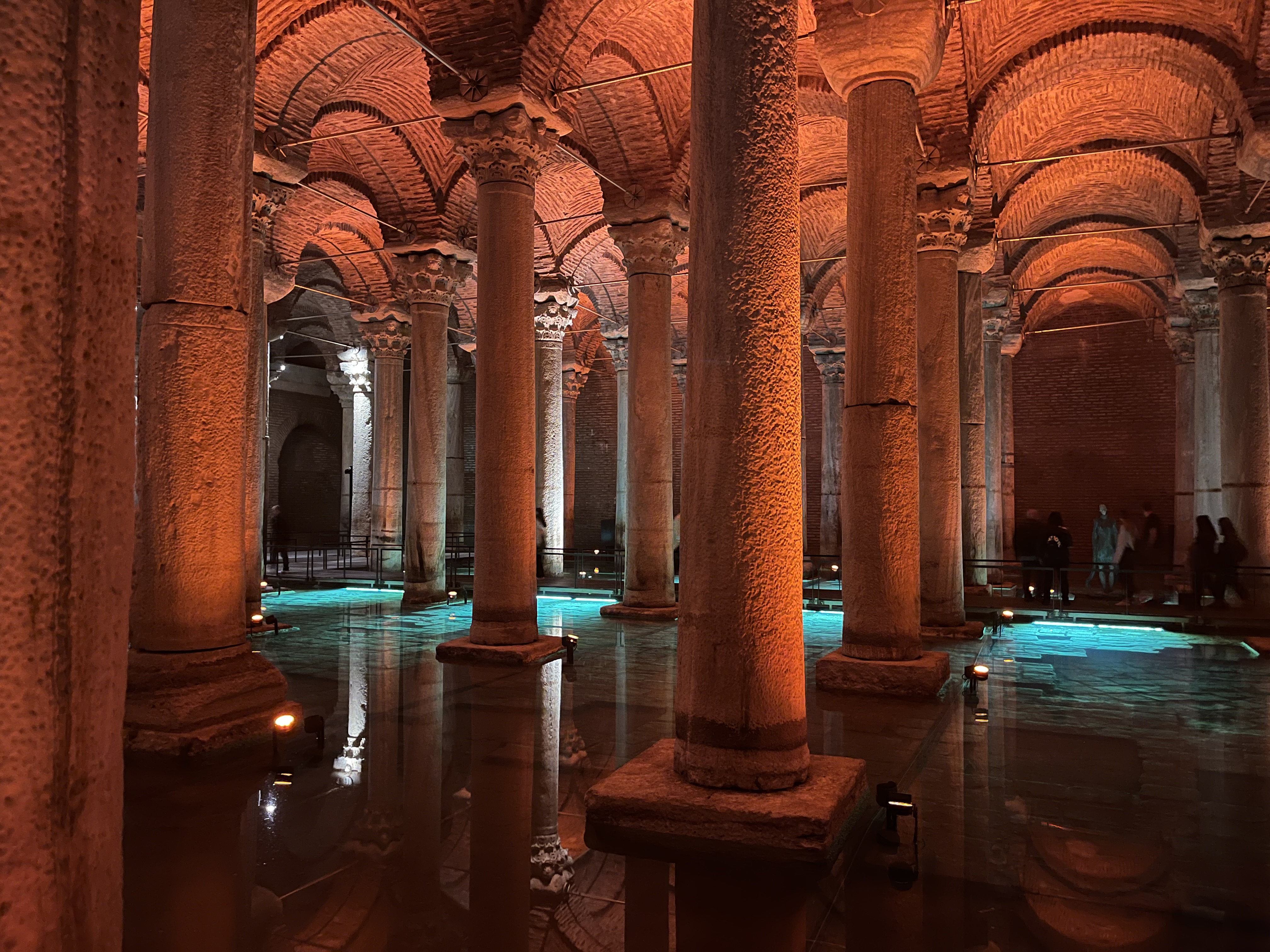
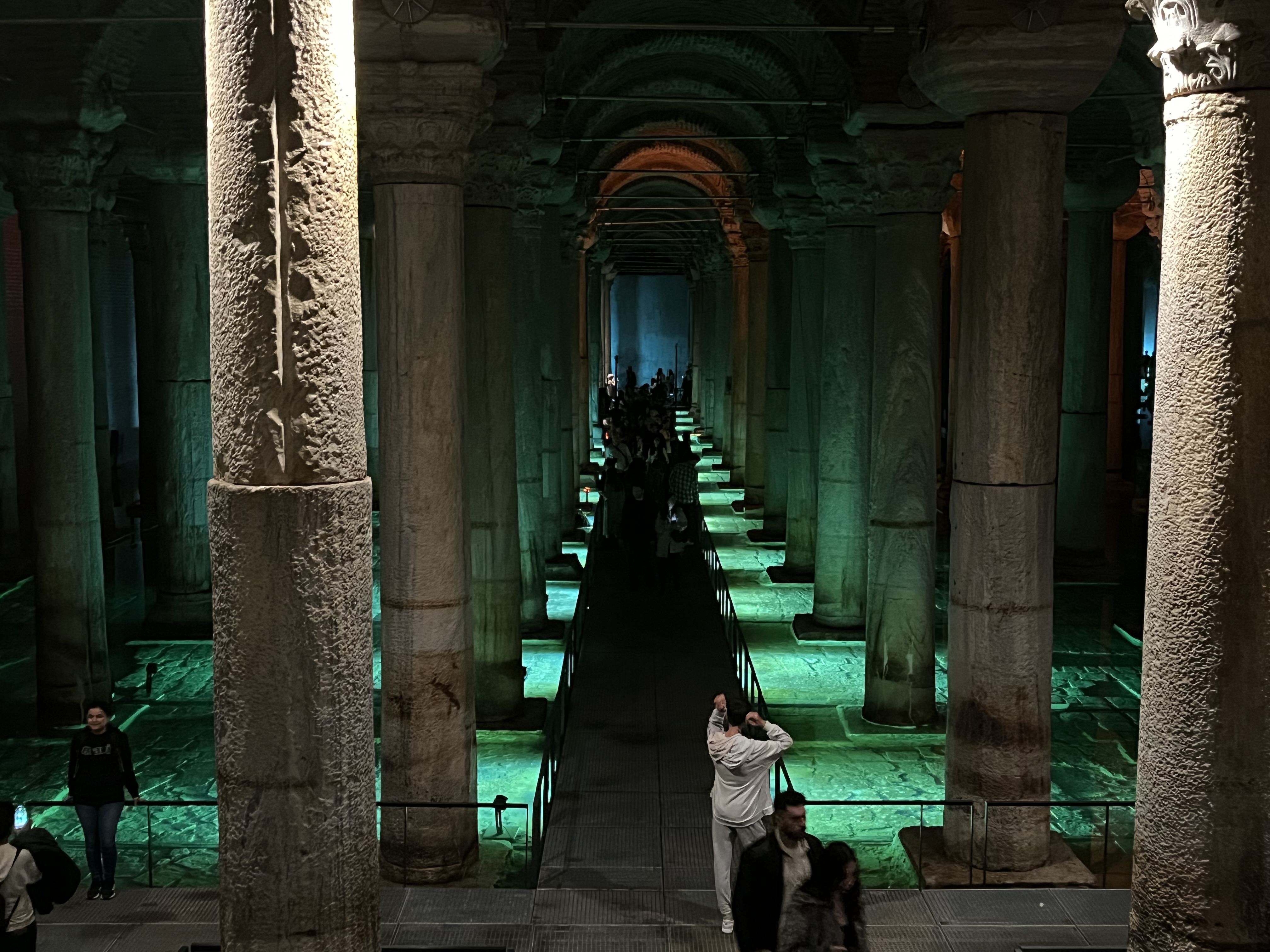
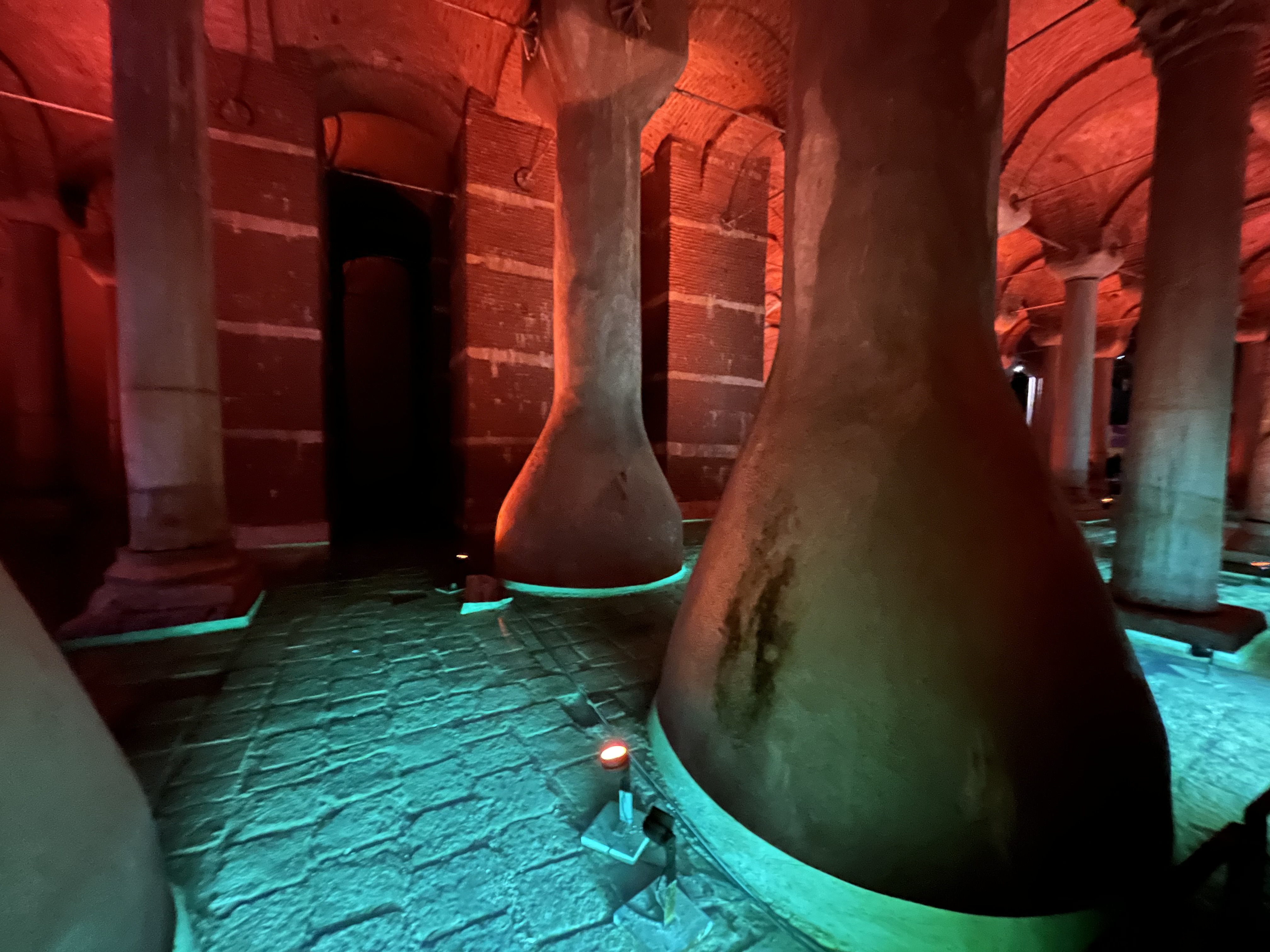
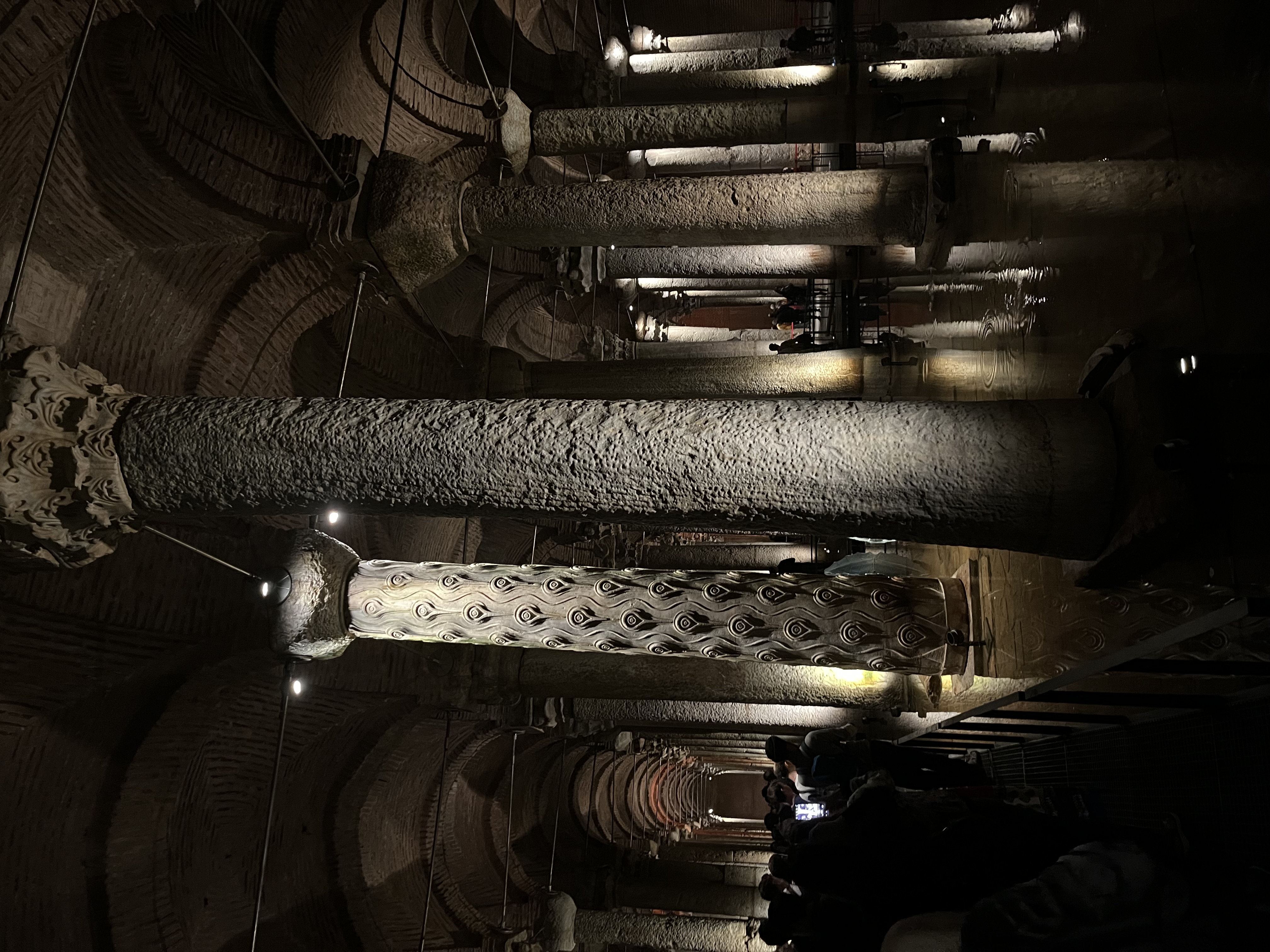
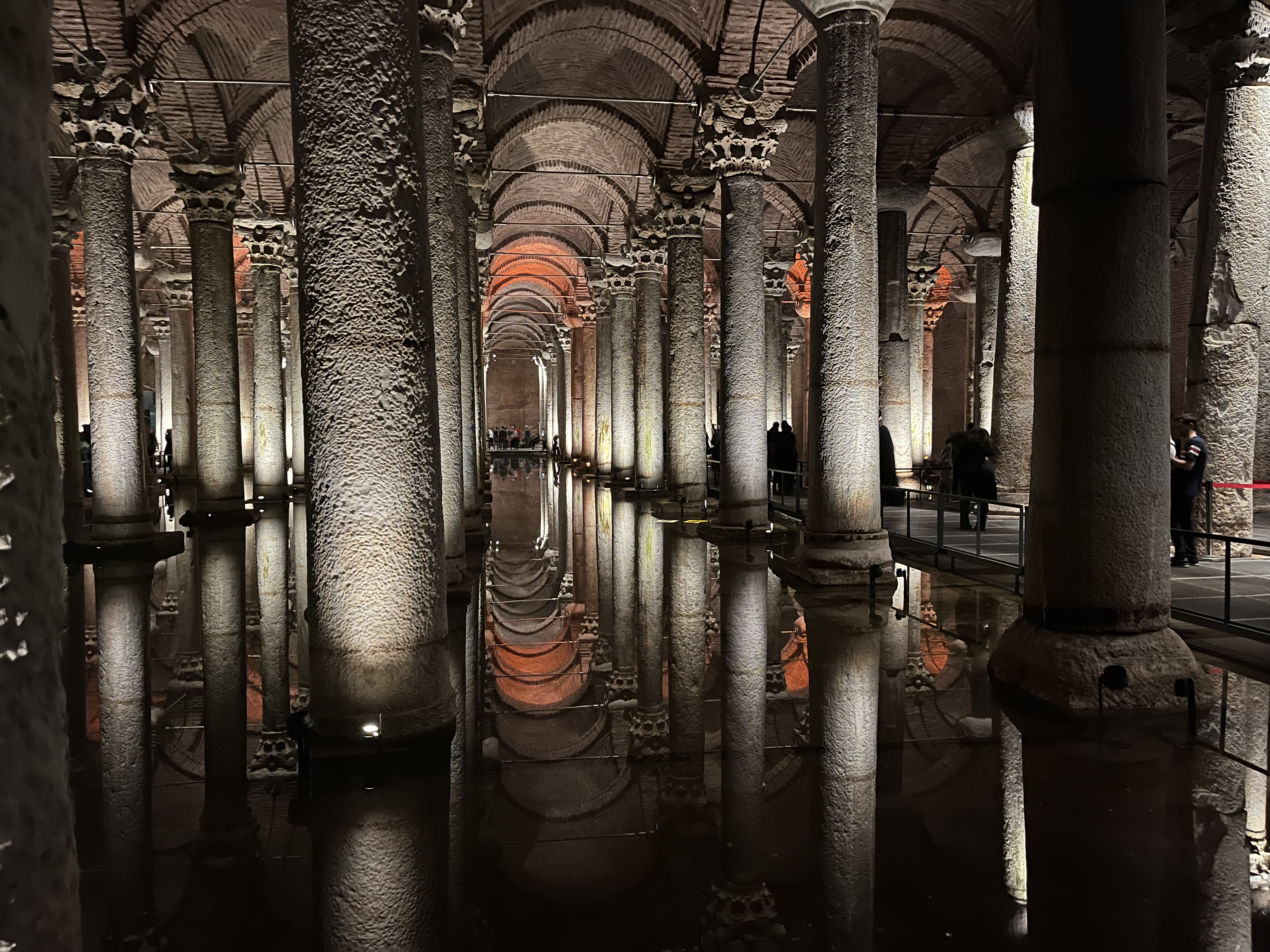
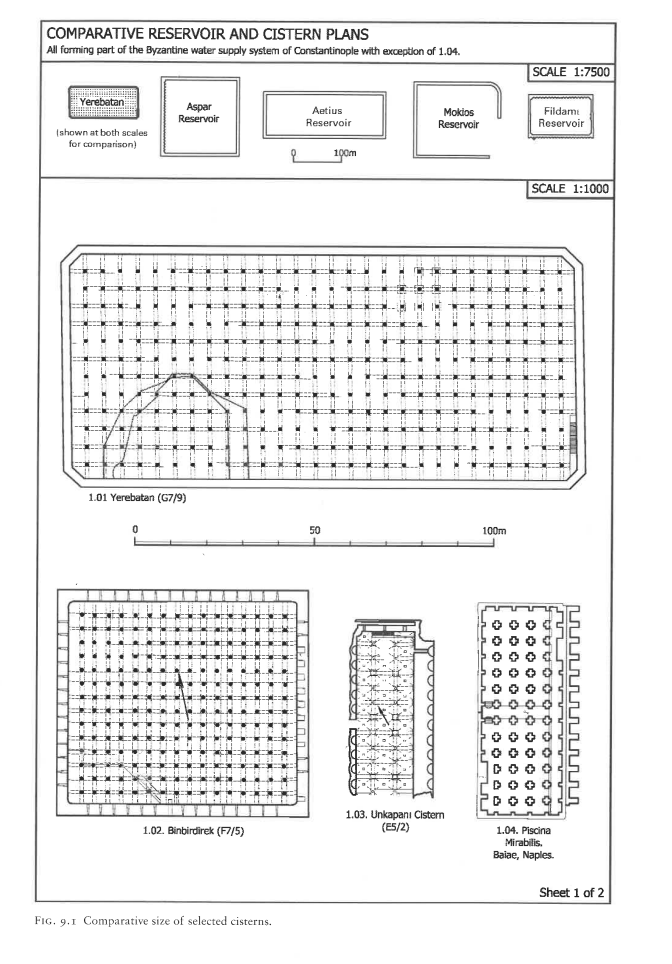
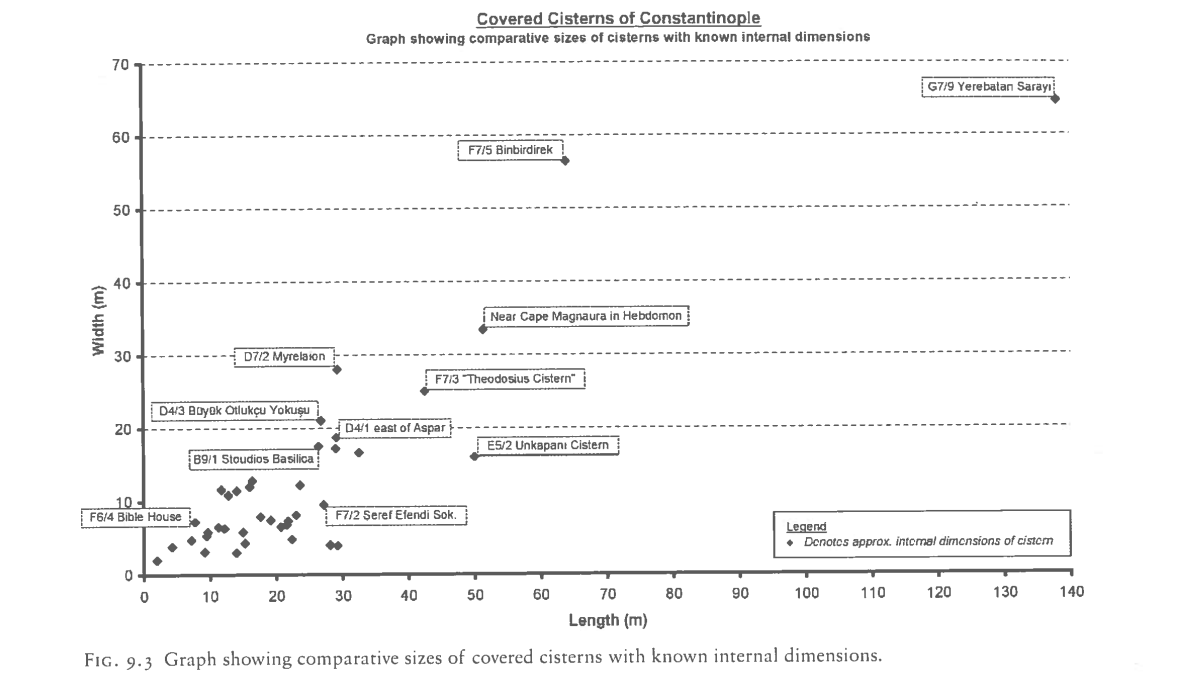
The Basilica Cistern measures 138 × 64.4 meters, holding about 80,000 tons of water. It features 336 columns, each 9 meters high and spaced 4.8 meters apart in a 12 × 28 grid. The cross vaults, built with square bricks (38–40 cm wide, 4 cm thick) and water-resistant Khorasan mortar, rest on these columns. The floor is tiled with baked bricks (40 × 40 cm), and the corners are rounded to resist inward pressure. While water was likely drawn through shafts, stairs were also provided for maintenance.
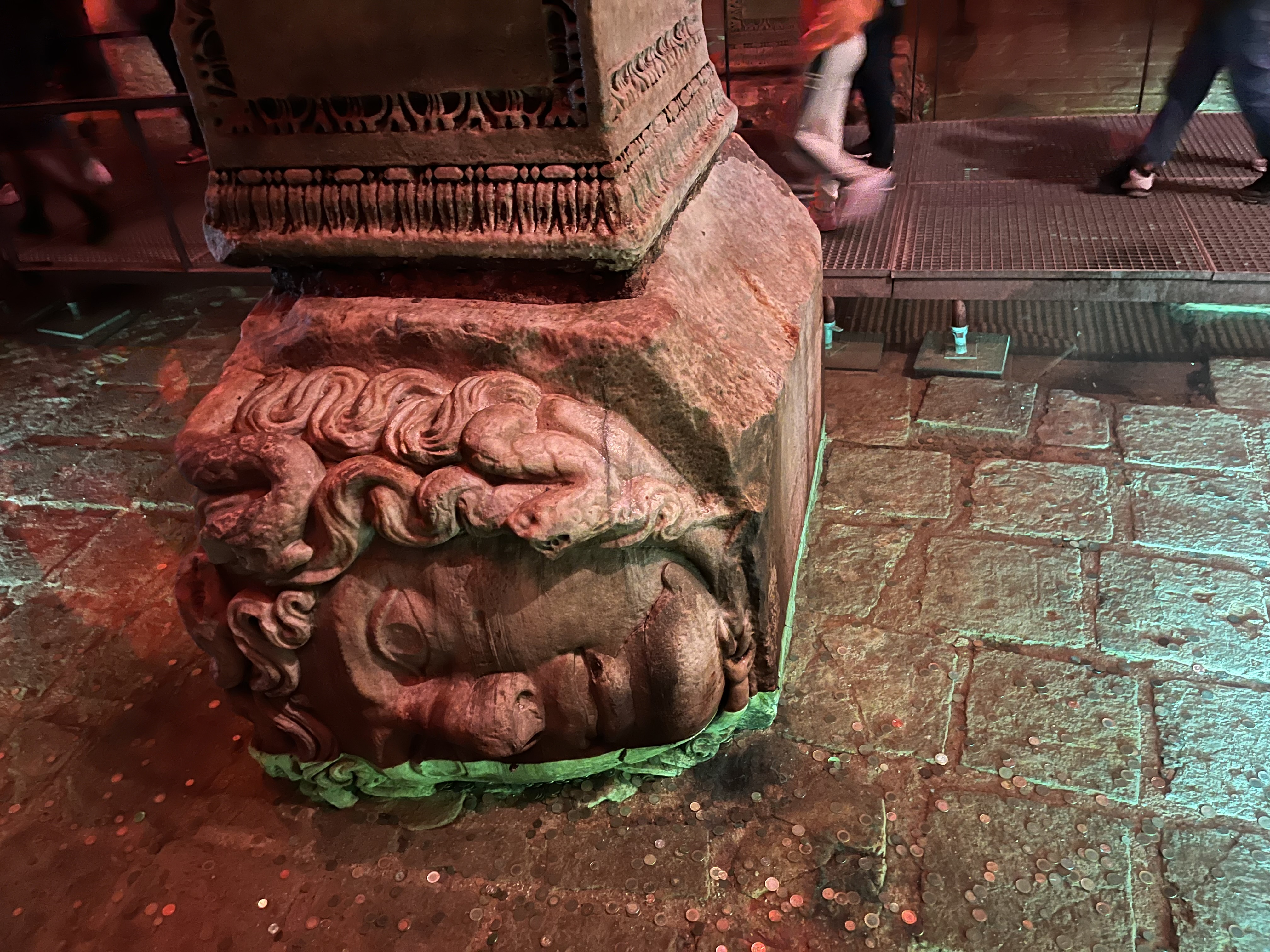
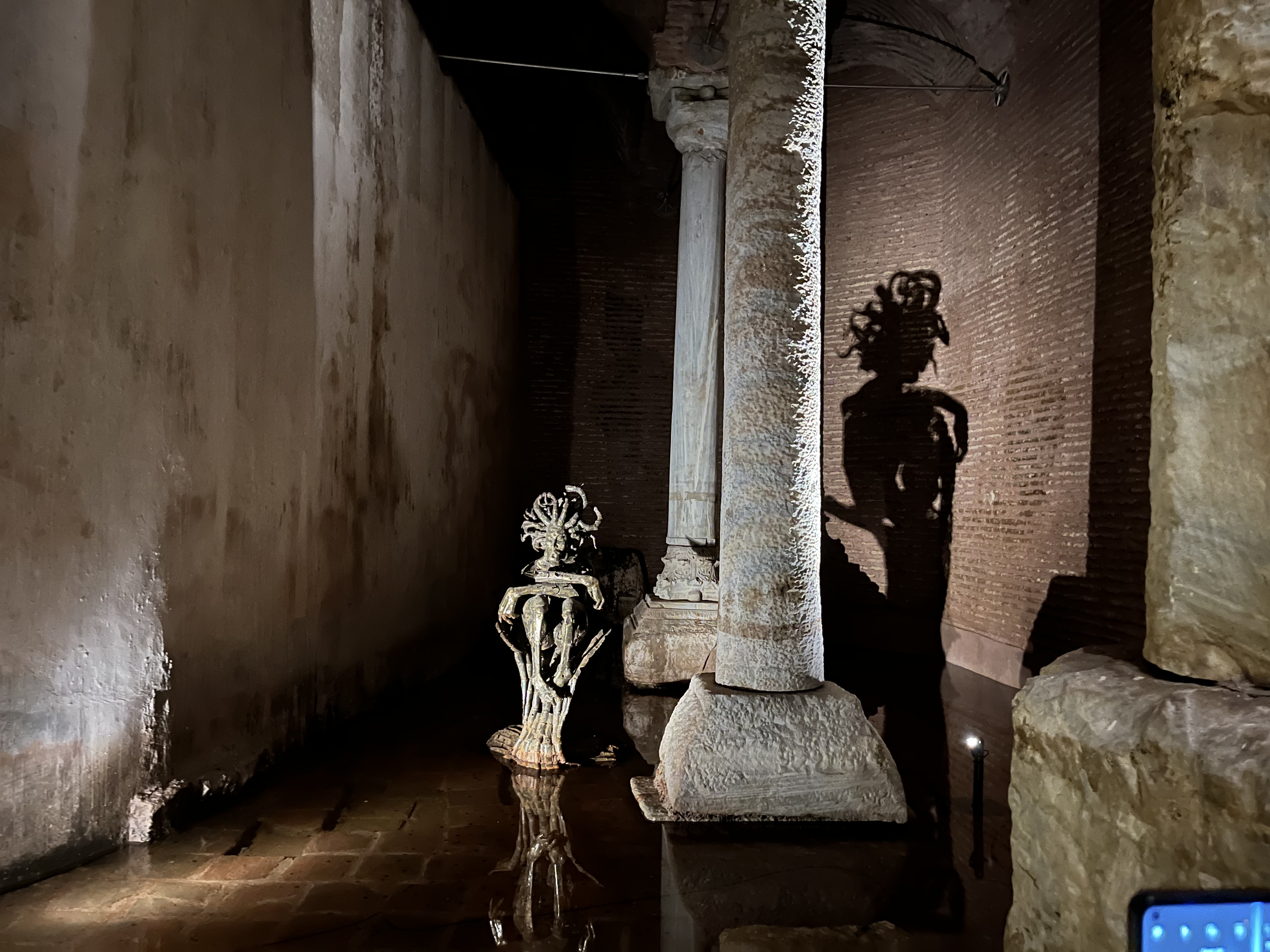
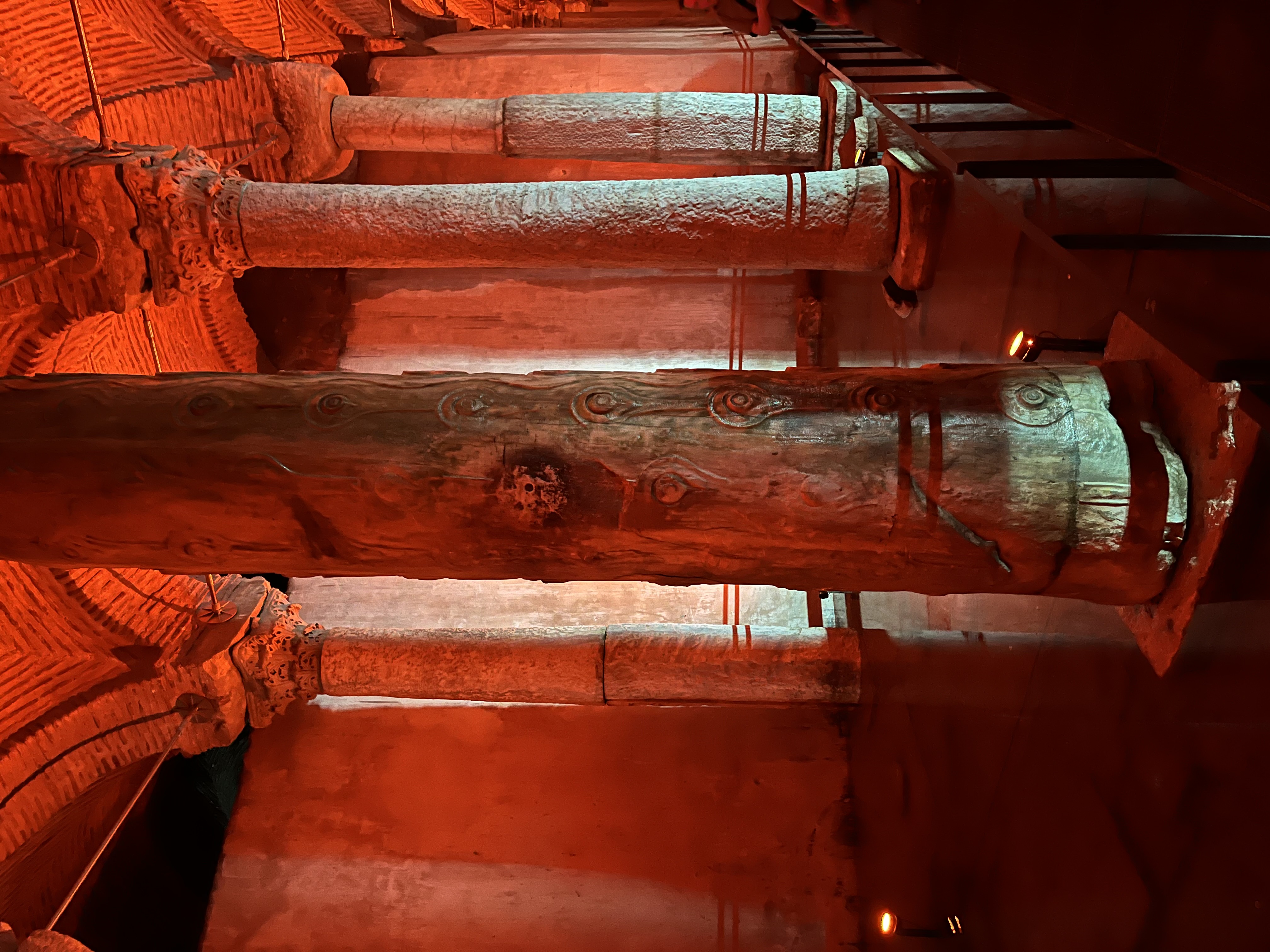
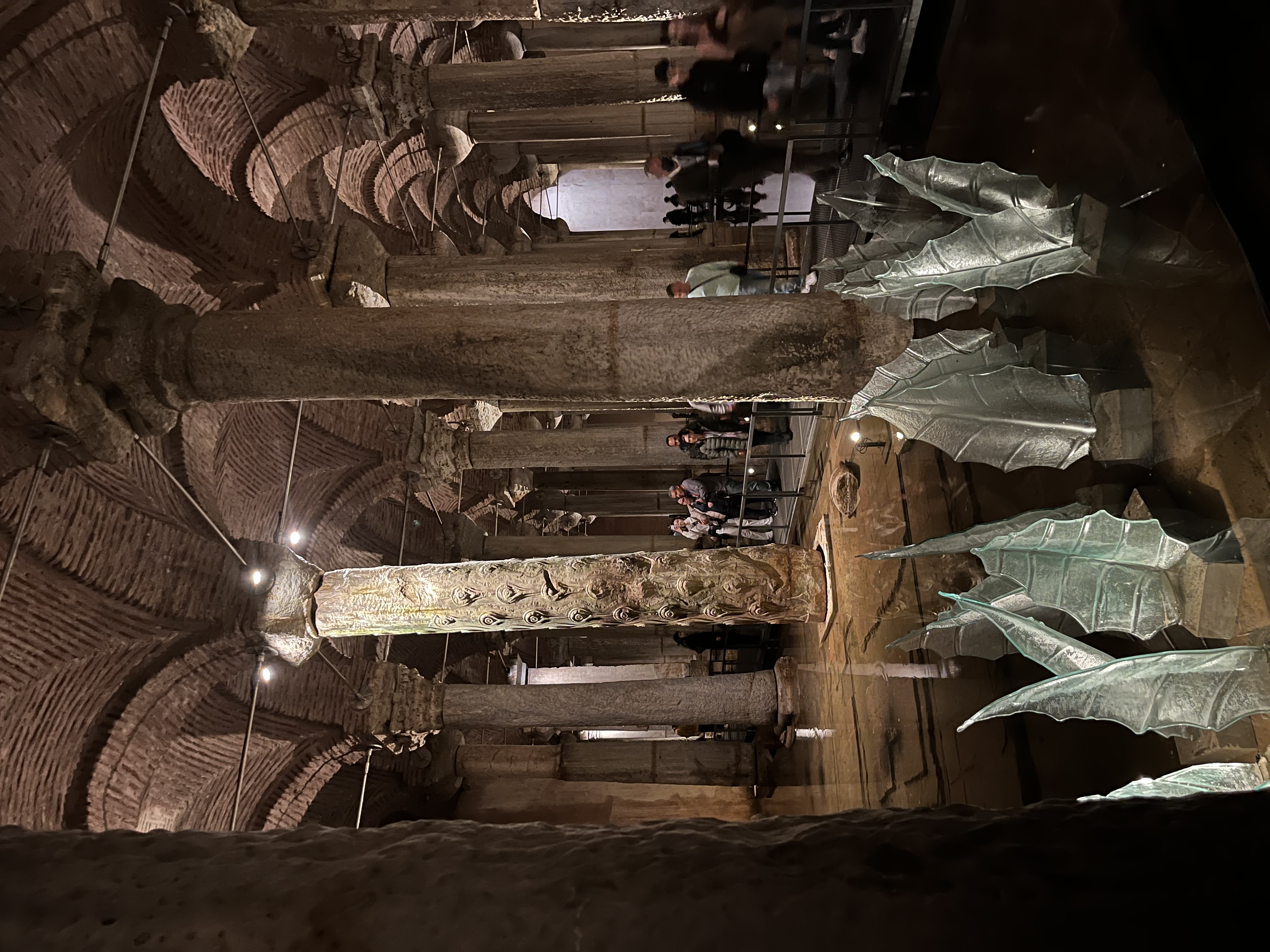
The cistern’s columns display a mix of reused capitals: mostly plain basket capitals, 98 acanthus capitals, and 3 Corinthian capitals (possibly dating to 200 CE or Constantine). Notably, it includes a 4th-century column shaft with a lopped branch design and two inverted Medusa heads, possibly from the Severan period.
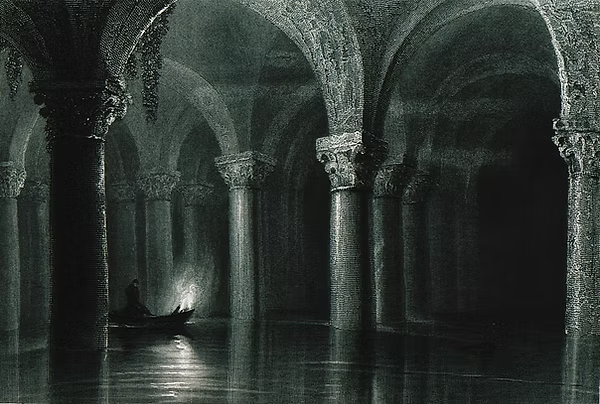
Built by Justinian in the 6th century, the cistern is elevated 30 meters above sea level and was connected to the Hadrianic water line near the imperial palace. Today, it is a popular tourist attraction and museum, with a water level maintained at about 1 meter and a visitor platform.