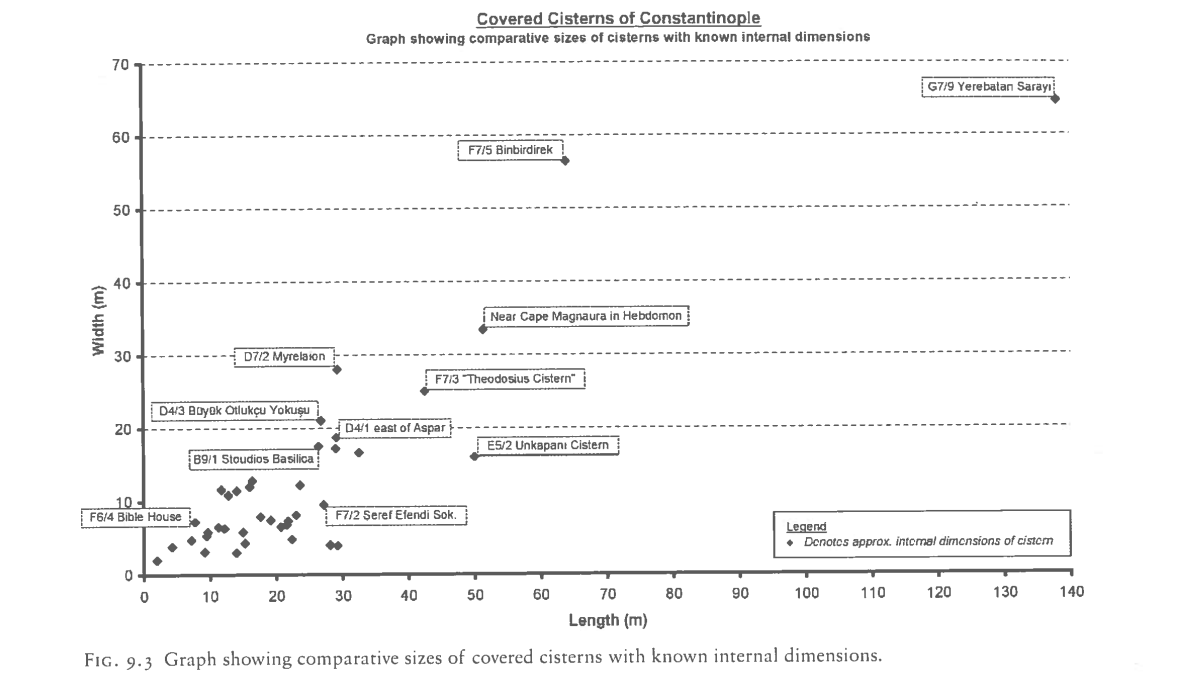
The Theodosian Cistern features a rectangular plan (24 × 40 meters) with 32 columns arranged in 4 × 8 rows, showcasing 5th-century Corinthian-style capitals and sail vaults. The upper walls include 16 windows for ventilation and excess water release. Constructed with 35 × 4 cm bricks and plastered with khorasan mortar, it likely drew water from the Valens Waterway, which ran along the Mese.
Dating to the Theodosian era, the cistern is believed to be named after Emperor Theodosius II (r. 402–450). In the late 18th to early 19th century, the Arif Paşa estate was built atop the cistern. This structure later served as the Istanbul Municipality building (1912) and the Eminönü Municipal Services Building (1930–1984).
Restoration began in 2004, including the demolition of the overlying building (2010) and the construction of a museum entrance (2016–2018). Since its restoration, the Şerefiye Cistern has operated as a museum.